Film review
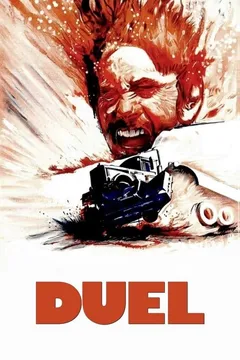
Duel1971
Steven Spielberg
Late 2025, I discover that the Film Heritage Foundation screens older movies on Thursday evenings at Regal Cinema down in Churchgate. Saturday Night Fever was the first movie I watched there. Aside from the fact that I was seated next to a group of old South Bombay women who were drooling over Travolta’s dances but could not decipher a word of the strong New York accent; Saturday Night Fever was definitely my favorite movie theatre experience. So obviously, when I find out that there is a screening of Spielberg’s Jaws taking place in early 2026, I want to go there.
Jaws was a treat. It got me hooked onto Spielberg and his movies. Until a few movies later Temple of Doom got me hooked off Spielberg.
Duel (1971) is Spielberg’s feature film directorial debut. It was apparently never meant for cinemas, but rather was a TV movie for ABC. Shot in about two weeks, Duel is basically Jaws on a highway. A man, a truck, and nowhere to hide. We were shown the film in class without knowing its name or what it was about. That made the experience even more exciting.
David Mann, played by Dennis Weaver, is a salesman driving across a desert in his car to meet a client. He overtakes a rusty, filthy truck. The truck passes him back and the passing turns into a game, which turns into harassment, and then into attempted murder. At a roadside café, Mann gets paranoid and confronts the wrong man, thinking he’s the driver. The truck stalks him through the rest of the drive. It tries to push him into a moving train, wrecks a gas station, and chases him even after his radiator hose bursts. In the end, Mann aims his car at the truck, jumps out at the last second and the truck follows the car off a cliff. The film ends with Mann sitting alone at the edge of the cliff at sunset.
When I think about early 70s films, I think about New Hollywood. And although Duel was a TV movie, it unmistakably has certain influences from that era. Let’s start with the fact that it’s a road movie (or an anti-road movie, as explained further). Easy Rider (1969) which most people believe to have started New Hollywood was a road movie. Bullitt (1968) was a cop thriller but its best known for its iconic car chase sequence. But New Hollywood road movies usually used the road to escape something, like a society or a job. Or to rebel. But David Mann in Duel is the opposite. He’s a suit wearing salesman, and the road doesn’t free him, instead it hurts him.
In Duel, you only ever see the truck driver’s arm and boots. This is because the driver isn’t important to the film as such. The director wants you to focus on the truck itself becoming a character. This is the same idea as seen in Jaws in which the shark gets barely 4 minutes of screen time in the entire movie. It’s also similar to New York City working as a character instead of a backdrop in Scorsese’s Taxi Driver (1976).
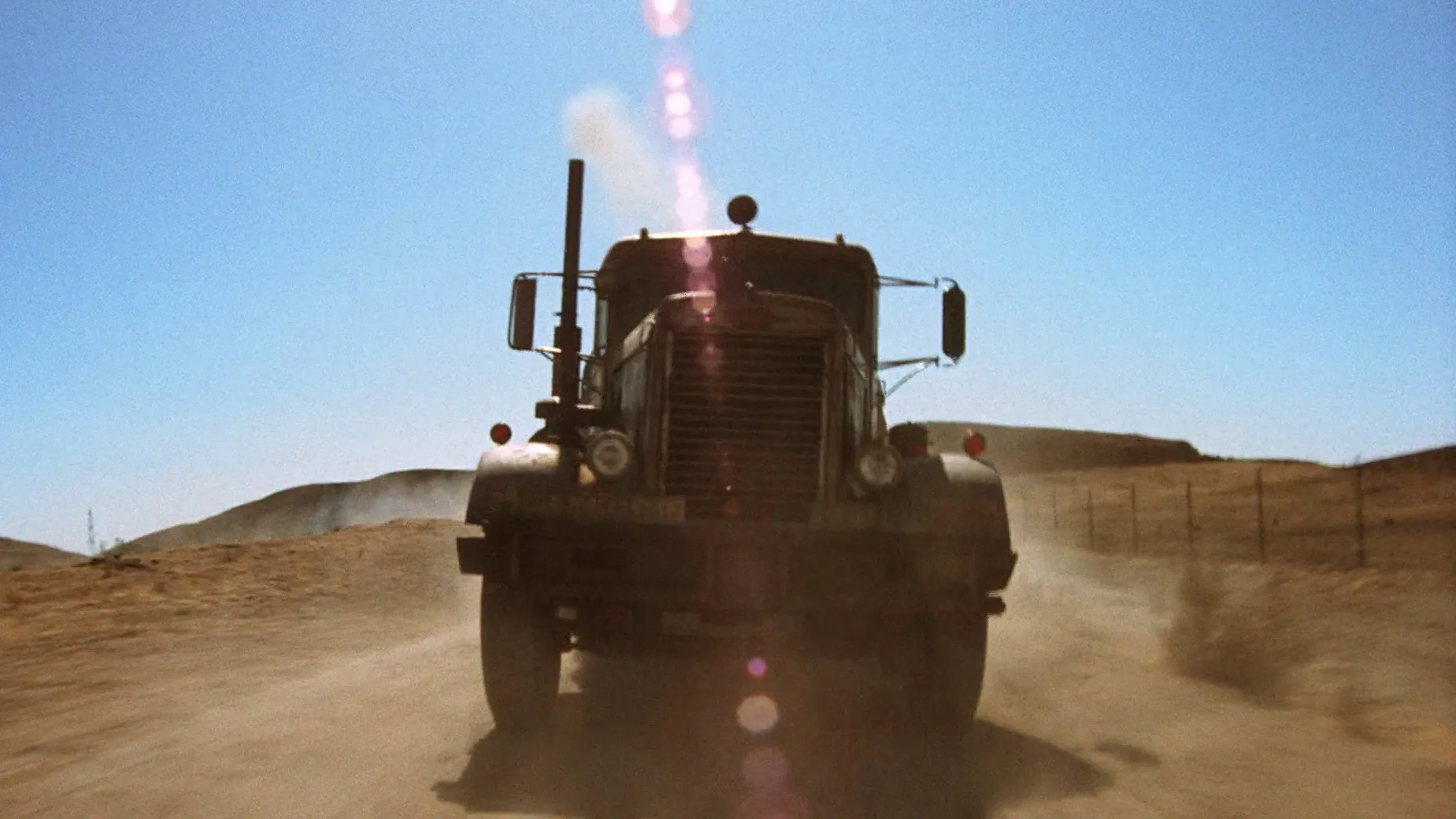 No face, no motive. Just a grille and a smokestack.
“David Mann” literally means “Man”. The protagonist is emasculated early on as evident from an argument with his wife on the phone and a radio talk show about a man who isn’t the “head of the family”. The ‘duel’ he has with the truck then turns to a kind of redemption or him trying to prove something to himself.
My favorite scene in the movie has to be the café scene. It’s pure paranoia and shot in close-ups. Spielberg leverages silence and other sounds over dialogue. Just like how the rest of the movie has the engine noise and the truck’s horn, in the café we get to hear Mann’s anxious inner voice. Even the ending of the movie, although cathartic, is mostly silent. While watching this movie in class, the professor talked about how movies are mainly about managing tension. Duel is a grade A example of this movie-making philosophy.
Does this film even have a deeper meaning to it? Is it just a cool movie about a guy pushing his Plymouth Valiant to its limits while trying to escape from a psycho killer truck? The way I look at it is that all pieces of art and literature exist in two versions (for an individual). One is the creator’s intention behind putting out a piece. And the other, is the consumer’s interpretation of the piece. I believe this is even more apparent in films and that’s why I absolutely adore David Lynch’s movies. He unapologetically refuses to explain them, and that is part of their charm. Duel works in a similar way. Spielberg never tells us why the driver wants Mann dead. There’s no motive, no face and no backstory. That gap is exactly what makes the film open to interpretation.
One reading I keep coming back to is that Duel is about sacrifice. It is obvious that David Mann loves his red car. When he stops to help a stranded school bus, he even shoos the kids away from it. To survive, Mann has to send that same car straight into the truck and let it go over the cliff with it. He wins the duel only by giving up the thing he cared about most. Sitting at the edge of the cliff at sunset, he isn’t triumphant. He’s quiet, and maybe a little lost.
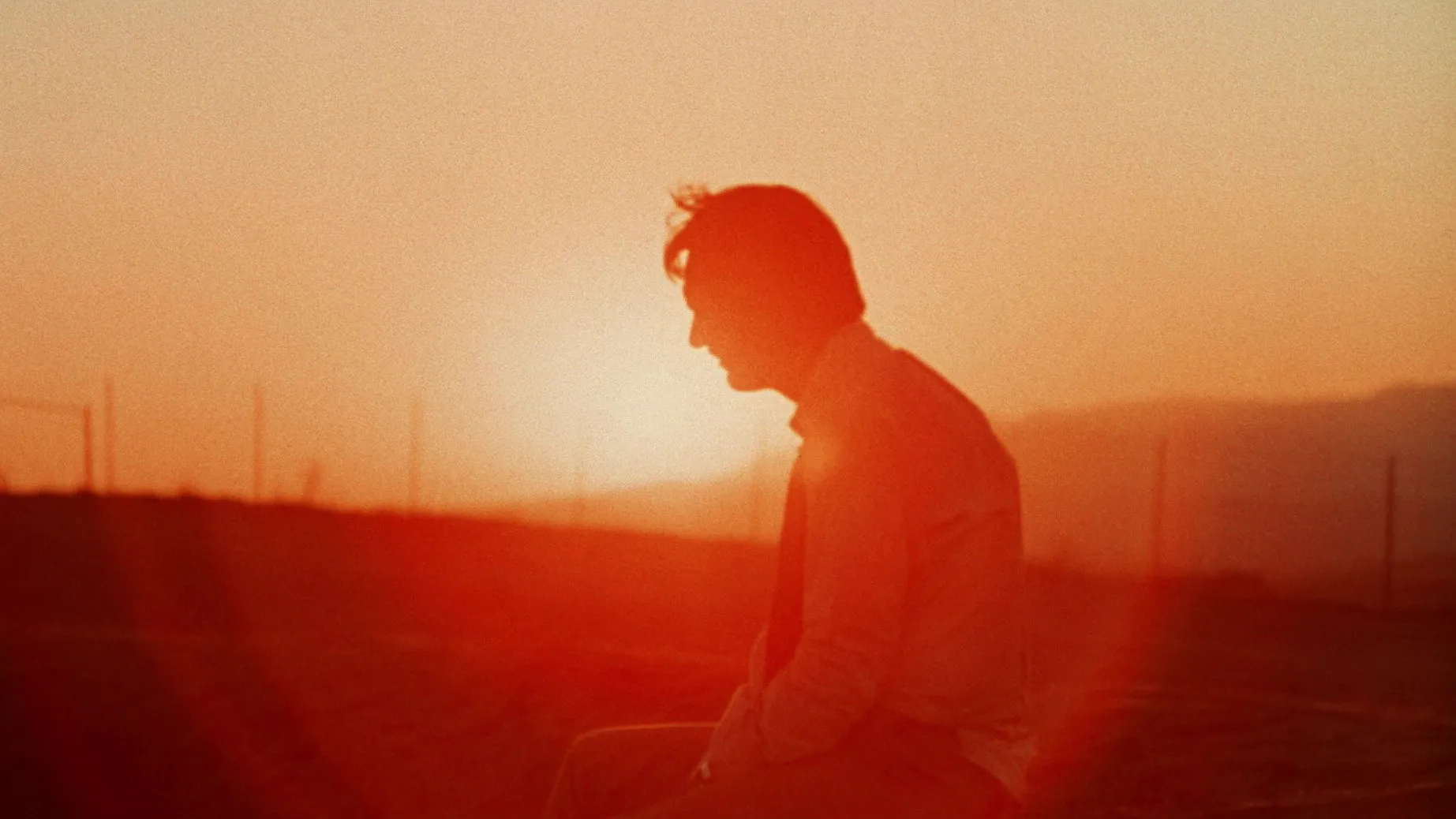 The duel is won, and the car is gone.
This movie perhaps also gave me an insight into how Spielberg started. He storyboarded most of the chases on a huge mural map of the route. Cameras sat low on the road, which gave the truck its almost monstrous stature. Richard Matheson wrote the script from his own short story, and it was later extended and released in cinemas abroad, which is why there are literally two versions of this film (not just the philosophical two versions I was alluding to).
I watched this movie in a classroom, but I keep thinking about how it would play out on the big screen at Regal on a Thursday evening. The truck’s grill would fill up the whole frame, and the horn would echo through the theatre. Maybe a row of aunties would gasp as the car swerved. There would be a lot of people taking pictures, and a lot of other people yelling at said people to stop taking pictures during the movie. I guess that’s part of the experience of watching a movie at the cinema.
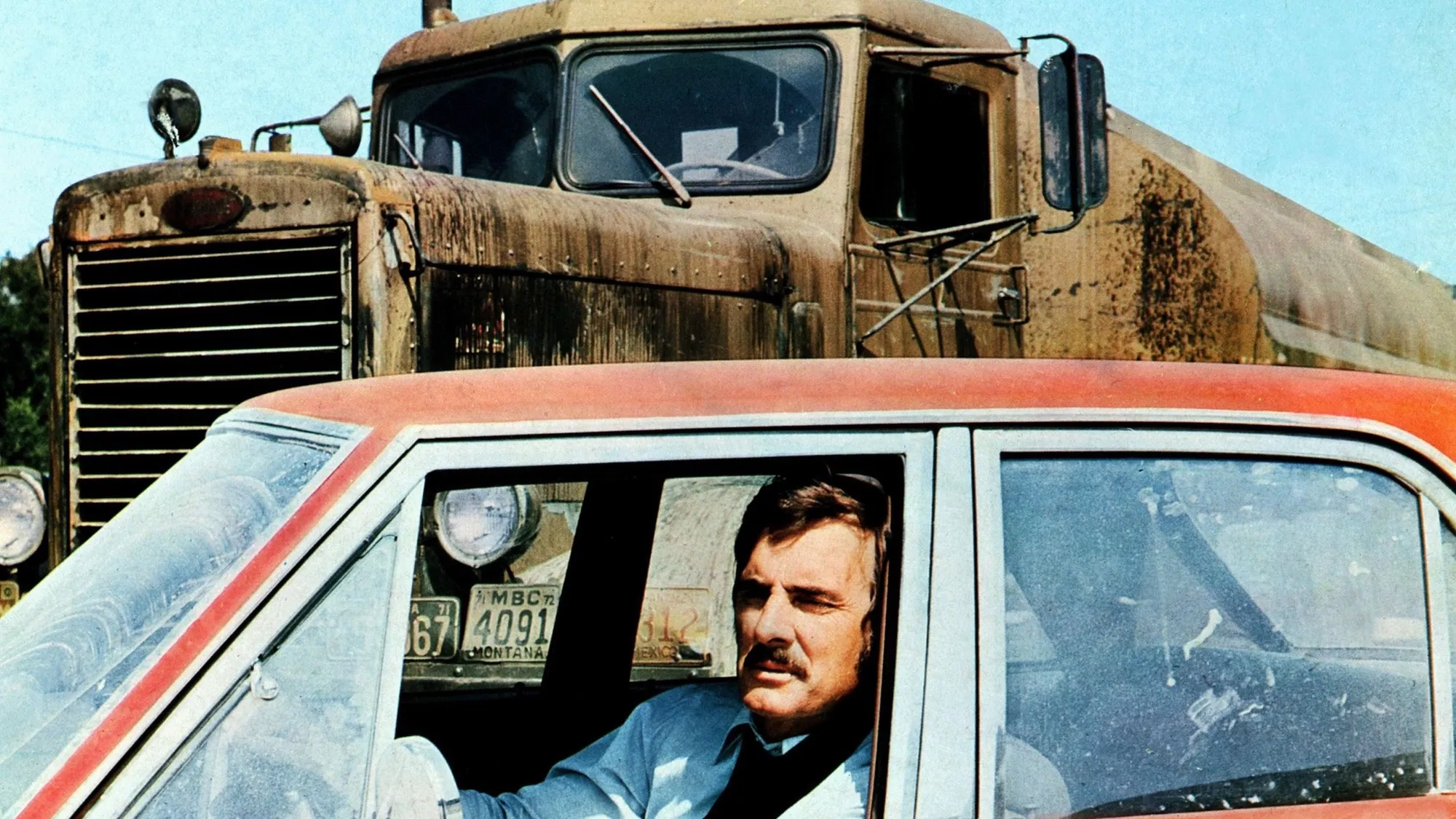 That grille, made for a much bigger screen.
Duel didn’t completely make up for Temple of Doom, but it got me hooked back onto Spielberg, at least enough to show up at Regal the next time his name is on the screen.