Film review
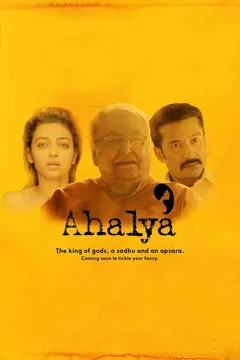
Ahalya2015
Sujoy Ghosh
Contains spoilers about Being John Malkovich (1999).
After watching Obsession earlier this year, I was browsing through the MUBI catalog looking for a lighthearted comedy. I saw Being John Malkovich listed as a comedy/fantasy and decided on watching that. It was anything but lighthearted. Being John Malkovich is a movie in which the protagonist (Craig) finds a way to literally enter John Malkovich’s head for 15 minutes. He and his coworker then sell trips inside, and it turns into a tangled fight over identity, desire, and control with a lot of people getting caught up in it. At the end of the movie, (spoiler) the protagonist gets stuck inside his wife’s mind, watching her be in a happy relationship with his co-worker.
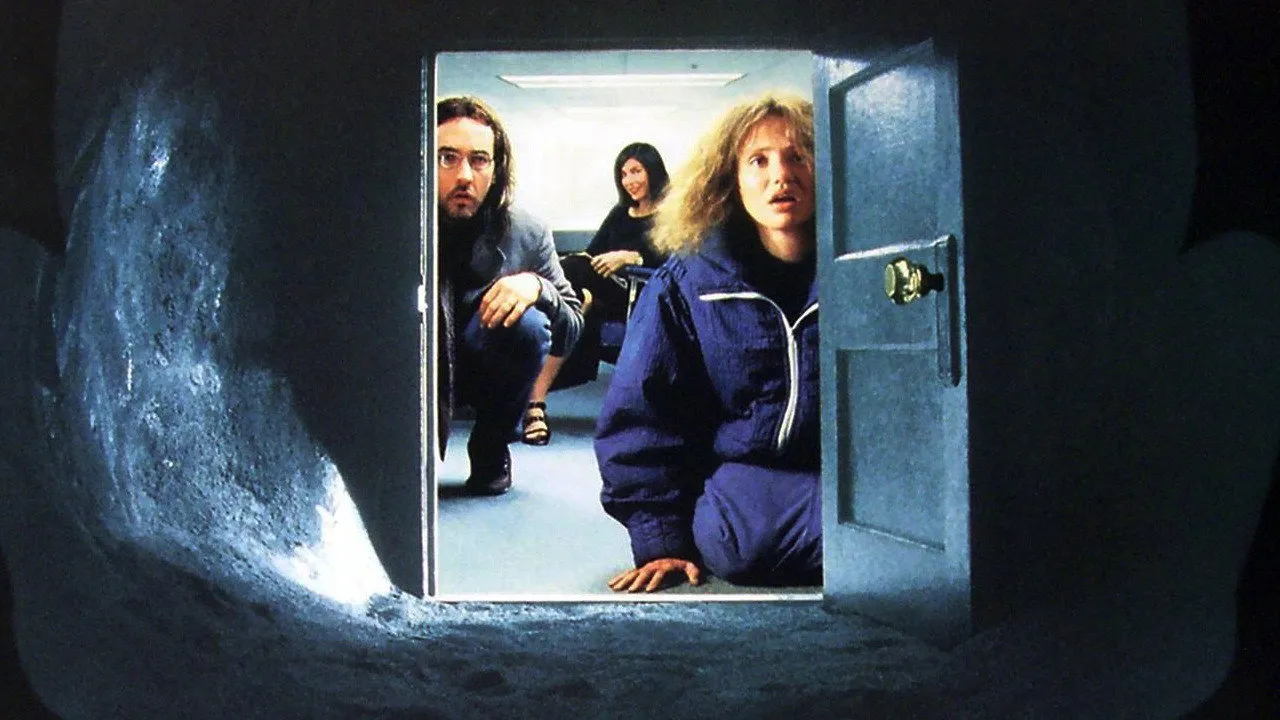 The door into John Malkovich, seen from the inside.
Watching Ahalya for the first time, I felt it was a very similar movie. But upon further reflection, I realized that both movies are quite different.
Ahalya is a 14-minute Bengali short by Sujoy Ghosh. A young police inspector, Indra Sen, visits the house of an elderly artist while investigating the disappearance of a man named Arjun. He’s let in by Ahalya, the artist’s much younger and beautiful wife. He can’t help being drawn to her. In the living room, he notices a row of lifelike dolls, one of which looks exactly like Arjun. The artist tells him about a stone that lets whoever holds it take on the form of anyone they want. Indra transforms into the artist to test the theory, and tempted by Ahalya, oversteps his boundaries. The film ends with him becoming the newest doll in the artist’s collection.
 Ahalya opens the door, and the test begins.
While discussing this movie with the class, the professor brought up the point about how this movie was almost a test that the director had posed to the audience. This is because of how open ended the movie is. Nothing is concretely shown. Part of the reason is that it is a retelling of a story from the Ramayana, and the director expects the audience to be familiar with it. In the original, Indra disguises himself as the sage Gautama to seduce Gautama’s wife Ahalya, and she’s the one cursed to become stone. Ghosh, in this film, flips that. Here the man who intrudes ends up being turned to stone.
Another, and a much stronger, in my opinion, reason why the film is so open ended, is because it works a lot better that way. By leaving interpretation fully in the minds of the audience, the movie opens up possibilities of us exploring what part of the story, and what explanation, our minds are naturally drawn towards. It also exposes a lot of our preconceived notions and tendencies.
My interpretation of the movie centered on consent, a theme that also runs through Being John Malkovich. Indra Sen is supposed to be investigating a disappearance. Instead, he walks into someone else’s home, goes after a married woman, and uses the stone to take on her husband’s form to get to her. Whatever Ahalya agreed to, she agreed to it with her husband, not with Indra. He is so consumed by lust that even though he knows what he is doing is wrong, he doesn’t stop. To me, this shows how even someone whose job is to uphold the law can be overtaken by his own desires. Seen this way, his fate as a doll is a punishment, much like the curse in the original myth, except that this time it falls on the man who deserves it. Then again, this is just one interpretation.
Another interpretation is that the artist and his wife are actively preying on people, and the house is a trap set up to lure men in. My reading has this element too, but the emphasis is different. In mine, Indra is punished for his lust. In this one, he simply walks into a trap, and the focus moves from what he deserved to what was done to him. This is an equally valid reading, and it raises its own question about consent: is Ahalya a willing partner in the scheme, or is she being used by her husband as bait?
Here’s how I think it exposes our judgements, in a non-conventional way. While defending the second interpretation, a person in class talked about how Ahalya was wearing revealing clothes. But I felt very strongly that she wasn’t and honestly, I just felt like the student was being very misogynistic in his observation. This was complete projection on my part. It could have been that the student was brought up in a certain household where people dressed in a more conservative way, and that affected his perspective of the world. I was too quick to label him as something extreme for that, and it really opened my eyes to this tendency of mine.
Coming back to Being John Malkovich, it’s easy to see why the two films felt so similar at first. In both, a supernatural device lets a man take over someone else’s body, and in both he uses that body to reach a woman he couldn’t otherwise have. Both men end up trapped as well. But the films treat this very differently. Being John Malkovich is absurd and chaotic. It is less interested in judging Craig than in asking what it means to want to be someone else. Its ending feels more ironic than deserved. Ahalya, on the other hand, works like a fable. It is rooted in a myth with a clear moral weight, and Indra’s fate feels like a consequence of what he did.
What stays with me the most is that the film is called Ahalya, not Indra or Goutam (Ahalya’s husband). In the myth, she is the one who is wronged, while the story belongs to the men around her. Ghosh’s version hands her the story back, but not her voice. We never learn what she wanted, knew or whether she was in danger. Every answer to that has to come from us.